
Best Counties for Homesteading in Texas
April 2026 · Based on federal data from 9 agencies
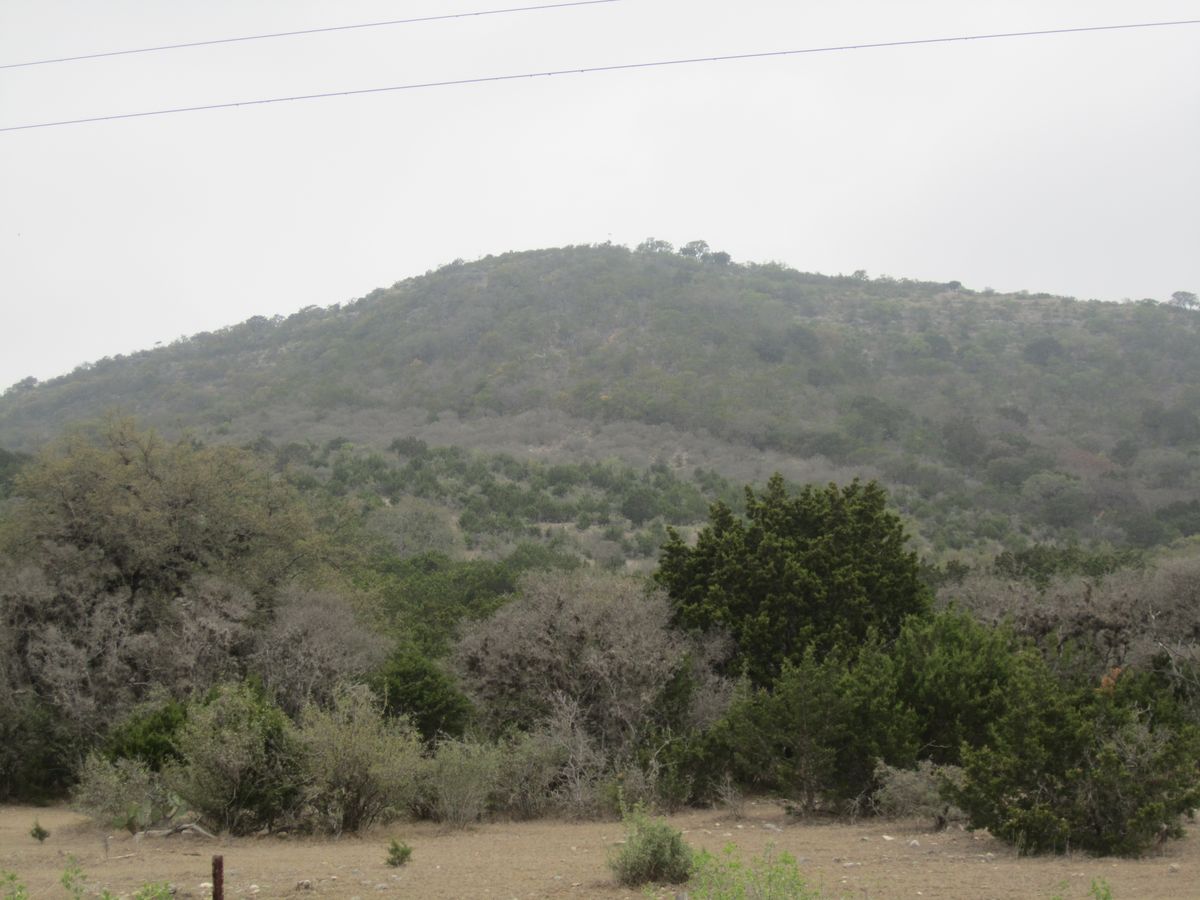
Texas lands on more homestead relocation shortlists than any other state, and the reasons are structural. No state income tax — ever. A $100,000 homestead exemption on property taxes (raised from $40,000 via Proposition 4 in November 2023, Tex. Tax Code § 11.13). Constitutional carry effective September 1, 2021 (Tex. Penal Code § 46.02). A right-to-farm law that shields agricultural operations from nuisance suits after one year (Tex. Agric. Code § 251.001). And no statewide residential building code — adoption is left entirely to municipalities and counties over 250,000 population (Tex. Local Gov't Code § 214.212), which means the vast majority of rural Texas has zero building permit requirements.
But Texas is not one state. It is at least five distinct geographies, and they differ in ways that matter to homesteaders. The Piney Woods of East Texas get 50+ inches of rain annually and sit in USDA Zones 8a–8b with 230+ frost-free days — but flood risk is real and the clay soils can fight you. The Hill Country offers limestone terrain, reliable well water from the Edwards Aquifer, and moderate growing seasons — but land prices have surged 30%+ since 2020 as Austin's growth spills outward. The Blackland Prairie running from Dallas south through San Antonio has some of the richest agricultural soil in North America. West Texas and the Panhandle offer the cheapest land in the state, but water scarcity from the depleting Ogallala Aquifer is a generational constraint. The Gulf Coast grows year-round but sits in the hurricane corridor.
We pulled federal data from FEMA, Census ACS, NOAA, USDA, and five other agencies to rank all 254 counties across the dimensions homesteaders actually make decisions on. Here is what the data shows.
Rankings reflect county-level averages from federal data sources — your specific parcel will differ based on location, soil type, and local ordinances. This is a research starting point, not professional real estate or financial advice. See our methodology for data sources, freshness, and known limitations.
Texas Counties
Click any county to view its full data profile. Colors show overall natural disaster risk from FEMA's National Risk Index.
Lowest Property Tax
Texas has no income tax, so the state leans heavily on property tax — the effective rate runs around 1.6%, one of the highest in the country. But two mechanisms change the math for homesteaders. First, the $100,000 homestead exemption (Tex. Tax Code § 11.13) knocks that amount off your assessed value on your primary residence. Second, agricultural valuation — commonly called "ag-exempt" or 1-d-1 appraisal (Tex. Tax Code § 23.51) — taxes qualifying land at its productive agricultural value rather than market value, which typically cuts the tax burden by 80–95%. You need a genuine agricultural use (livestock, crops, timber, bees, or wildlife management) and most counties require 10–20 acres minimum. These counties have the lowest median property tax bills before ag-exempt is applied.
| # | County | Property Tax | Median Home | Population |
|---|---|---|---|---|
| 1 | King County | $513 | -- | 216 |
| 2 | Ward County | $562 | $117,700 | 11,347 |
| 3 | Borden County | $583 | $104,200 | 686 |
| 4 | San Augustine County | $629 | $82,400 | 7,920 |
| 5 | Hudspeth County | $632 | $57,400 | 3,329 |
| 6 | Cottle County | $682 | $51,400 | 1,647 |
| 7 | Cochran County | $696 | $48,000 | 2,529 |
| 8 | Culberson County | $714 | $83,300 | 2,181 |
| 9 | Stonewall County | $741 | $54,700 | 1,331 |
| 10 | La Salle County | $762 | $99,400 | 6,965 |
Longest Growing Season
Texas spans USDA Hardiness Zones 6b (Panhandle, last frost late April) through 9b (Rio Grande Valley, where frost is rare). The spread in growing season length is enormous — from under 100 frost-free days in the northern Panhandle to 300+ in the Lower Valley. South Texas and the Gulf Coast offer near-year-round production for warm-season crops. The Blackland Prairie and Cross Timbers run 220–240 days. The Hill Country averages 230–250 days depending on elevation. East Texas sits around 240 days with reliable rainfall that eliminates irrigation dependency for most crops. These counties lead the NOAA data for frost-free days.
| # | County | Growing Days | Hardiness Zone | Precipitation |
|---|---|---|---|---|
| 1 | Cameron County | 160 days | 9b | 39.2" / yr |
| 2 | Hidalgo County | 157 days | 9a | 39.1" / yr |
| 3 | Starr County | 157 days | 9a | 39" / yr |
| 4 | Willacy County | 157 days | 9a | 39.1" / yr |
| 5 | Kenedy County | 154 days | 9a | 38.9" / yr |
| 6 | Brooks County | 153 days | 9a | 38.9" / yr |
| 7 | Jim Hogg County | 153 days | 9a | 38.9" / yr |
| 8 | Zapata County | 153 days | 9a | 38.9" / yr |
| 9 | Kleberg County | 150 days | 9a | 38.8" / yr |
| 10 | Duval County | 148 days | 9a | 38.7" / yr |
Lowest Natural Disaster Risk
Texas has the most diverse hazard profile of any state. The Gulf Coast takes direct hurricane hits — Hurricane Harvey (2017) dropped 60+ inches of rain on parts of Harris County. Tornado Alley cuts through North Texas and the Panhandle, with the Dallas–Fort Worth metro averaging 10+ tornadoes per year in the surrounding counties. The Rio Grande Valley floods regularly. West Texas faces wildfire risk that intensified after the Smokehouse Creek Fire in February 2024 burned over 1 million acres in the Panhandle — the largest wildfire in Texas history. And the February 2021 Winter Storm Uri exposed how vulnerable the entire state grid is to extreme cold events. These counties have the lowest composite risk scores in FEMA's National Risk Index.
| # | County | Overall Risk | Tornado | Flood | Disasters |
|---|---|---|---|---|---|
| 1 | Andrews County | Very Low | Very Low | Very Low | 12 |
| 2 | Archer County | Very Low | Relatively Low | Very Low | 15 |
| 3 | Armstrong County | Very Low | Very Low | Very Low | 13 |
| 4 | Bailey County | Very Low | Relatively Low | Very Low | 11 |
| 5 | Baylor County | Very Low | Relatively Low | Very Low | 10 |
| 6 | Blanco County | Very Low | Relatively Low | Relatively Low | 14 |
| 7 | Borden County | Very Low | Very Low | Very Low | 8 |
| 8 | Bosque County | Very Low | Relatively Moderate | Relatively Low | 13 |
| 9 | Brewster County | Very Low | Very Low | Very Low | 10 |
| 10 | Briscoe County | Very Low | Very Low | Very Low | 9 |
Most Affordable (Median Home Value)
Rural Texas land prices vary wildly by region. Hill Country acreage near Fredericksburg or Dripping Springs now commands $15,000–$25,000 per acre as of early 2026, driven by Austin spillover. But West Texas and the Panhandle still offer raw land under $1,500/acre if you can solve the water problem. The rural counties in Deep East Texas and South Texas run $3,000–$6,000/acre with far more rainfall. Median home values below are the best county-level proxy from Census ACS for overall affordability — and the cheapest counties are concentrated along the Rio Grande and in the western half of the state, where population density drops below 2 people per square mile.
| # | County | Median Home | Property Tax | Population |
|---|---|---|---|---|
| 1 | Cochran County | $48,000 | $696 | 2,529 |
| 2 | Cottle County | $51,400 | $682 | 1,647 |
| 3 | Stonewall County | $54,700 | $741 | 1,331 |
| 4 | Knox County | $55,100 | $1,088 | 3,333 |
| 5 | Hudspeth County | $57,400 | $632 | 3,329 |
| 6 | Foard County | $65,000 | $796 | 1,075 |
| 7 | Hardeman County | $65,800 | $948 | 3,541 |
| 8 | Willacy County | $66,900 | $1,161 | 20,308 |
| 9 | Dickens County | $67,000 | $807 | 1,570 |
| 10 | Throckmorton County | $67,000 | $878 | 1,439 |
Best for Off-Grid Living
Texas is one of the most permissive states for off-grid living, and it starts with the building code situation: no statewide residential building code exists (Tex. Local Gov't Code § 214.212). Rural counties under 250,000 population — which is the vast majority — are not required to adopt or enforce any building code at all. Rainwater harvesting is not just legal but actively encouraged by state law (Tex. Water Code § 16.0121), with financial incentives for rainwater systems. Off-grid solar is unrestricted. Composting toilets are allowed in some counties under on-site sewage facility rules (Tex. Health & Safety Code § 366.001). The composite ranking below weights low property tax, high solar irradiance (NREL data), and low population density — the three factors that most directly predict off-grid viability.
| # | County | Solar (kWh/m²) | Property Tax | Population |
|---|---|---|---|---|
| 1 | King County | 4.8 | $513 | 216 |
| 2 | Borden County | 4.9 | $583 | 686 |
| 3 | Hudspeth County | 5 | $632 | 3,329 |
| 4 | Culberson County | 5 | $714 | 2,181 |
| 5 | Cottle County | 4.8 | $682 | 1,647 |
| 6 | San Augustine County | 5 | $629 | 7,920 |
| 7 | Ward County | 5 | $562 | 11,347 |
| 8 | Cochran County | 4.8 | $696 | 2,529 |
| 9 | Brooks County | 5.3 | $780 | 7,059 |
| 10 | Stonewall County | 4.8 | $741 | 1,331 |
What to Watch Out For
Before you narrow your search to one county, these are the issues that catch buyers off guard most often.
Water is the make-or-break factor
Texas groundwater operates under the "rule of capture" — your neighbor can legally pump from the same aquifer with no obligation to leave water for you. In areas overlying the Ogallala Aquifer (Panhandle and West Texas), water tables have dropped 100+ feet in some counties since the 1960s. Groundwater conservation districts can impose pumping limits, but coverage is inconsistent. Before buying, confirm the aquifer depth, well yields from neighboring properties, and whether a groundwater conservation district governs the area. A dry well on cheap land is not a deal — it is a liability.
Property tax "sticker shock" after losing ag-exempt
Many rural parcels carry an agricultural valuation (1-d-1 appraisal) that suppresses the tax bill by 80–95%. If you buy the land and fail to maintain a qualifying agricultural use, the county appraisal district will roll back the valuation to market rate — and you owe the difference for up to five years plus 7% interest (Tex. Tax Code § 23.55). A 50-acre parcel valued at $500/acre under ag-exempt could jump to $5,000/acre at market, turning a $200/year tax bill into $4,000+. Confirm the ag-exempt status, understand what use qualifies, and plan to maintain it from day one.
Feral hogs are not a minor nuisance
Texas has an estimated 2.6 million feral hogs — more than any other state — causing over $500 million in agricultural damage annually. They destroy gardens, root up pasture, damage fencing, contaminate water sources, and can injure livestock. Texas allows year-round hunting with no bag limit and even permits aerial hunting from helicopters (Tex. Parks & Wild. Code § 43.0611). But the population is still growing. In any rural county, ask neighbors specifically about hog pressure and expect to invest in hog-proof fencing for garden areas.
The Texas grid is its own island
ERCOT — the Texas electrical grid — is intentionally disconnected from the national grid to avoid federal regulation. Winter Storm Uri in February 2021 caused multi-day outages across the state that killed over 200 people. Grid improvements have been made since, but ERCOT remains structurally isolated. If you are planning an off-grid or grid-tied homestead, factor in backup power generation and insulation for extreme cold events that the grid may not survive. This is not theoretical risk — it happened within the last five years.
Deed restrictions can exist without an HOA
In Texas, deed restrictions run with the land regardless of whether a homeowners association exists to enforce them. Rural subdivisions from the 1970s–2000s may carry restrictions that prohibit livestock, limit outbuildings, require minimum home sizes, or ban manufactured homes — and these are enforceable by any property owner in the subdivision. A title search will reveal deed restrictions, but many buyers skip this step on rural land. Always pull the full deed restriction history before closing, especially in counties near metro areas where old subdivisions are common.
Texas at a Glance
Property Tax
1.6% effective rate
Homestead exemption: $100,000
Gun Laws
Constitutional Carry
No permit required, open carry legal
Water Rights
Prior Appropriation
Rainwater collection: legal & incentivized
Building Codes
No Statewide Code
Rural counties: no permits required
Right to Farm
Protected
Nuisance suit protection after 1 year
Homeschool
Low Regulation
No registration or testing required
See the full regulatory breakdown on the Texas state page.
Compare with your priorities
These rankings use equal weighting. Your priorities are different. Use the Location Finder to score all 254 Texas counties with your own weights.
Related State Guides
Continue your research in other high-interest homesteading states. All guides use the same federal data sources.
 Arkansas
County rankings by property tax, growing season, disaster risk, and off-grid potential.
 Kentucky
County rankings by property tax, growing season, disaster risk, and off-grid potential.
 Tennessee
County rankings by property tax, growing season, disaster risk, and off-grid potential.